If “slowness” is the keyword defining Victoria, much of my understanding of the city comes from the hotels where I stayed. Rather than altering the city’s rhythm, they served as distinct “observation windows”: some faced the harbor, others were tucked away in the Old Town; some were modern, while others whisked you away from the city center entirely.
Through these varied spaces, I gradually pieced together another side of Victoria—the quietude of its nights, the softness of its mornings, and the way one truly unwinds at the end of the day.
1.Fairmont Empress: Staying in a Historic Harbor Landmark
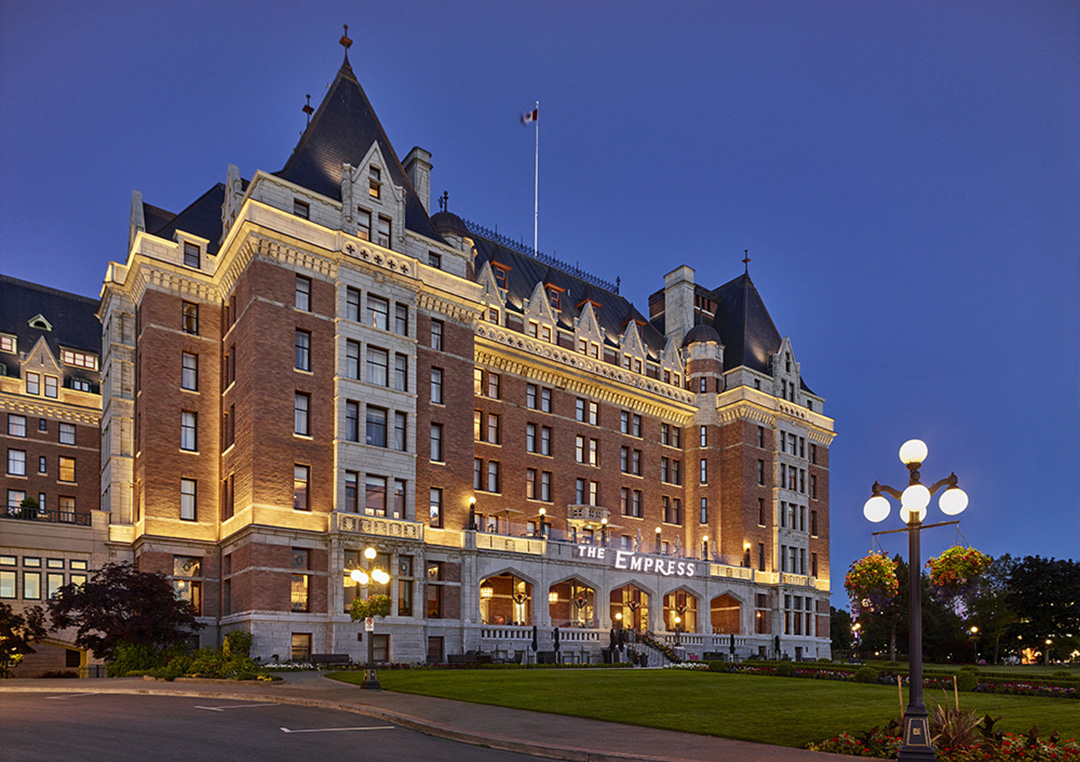
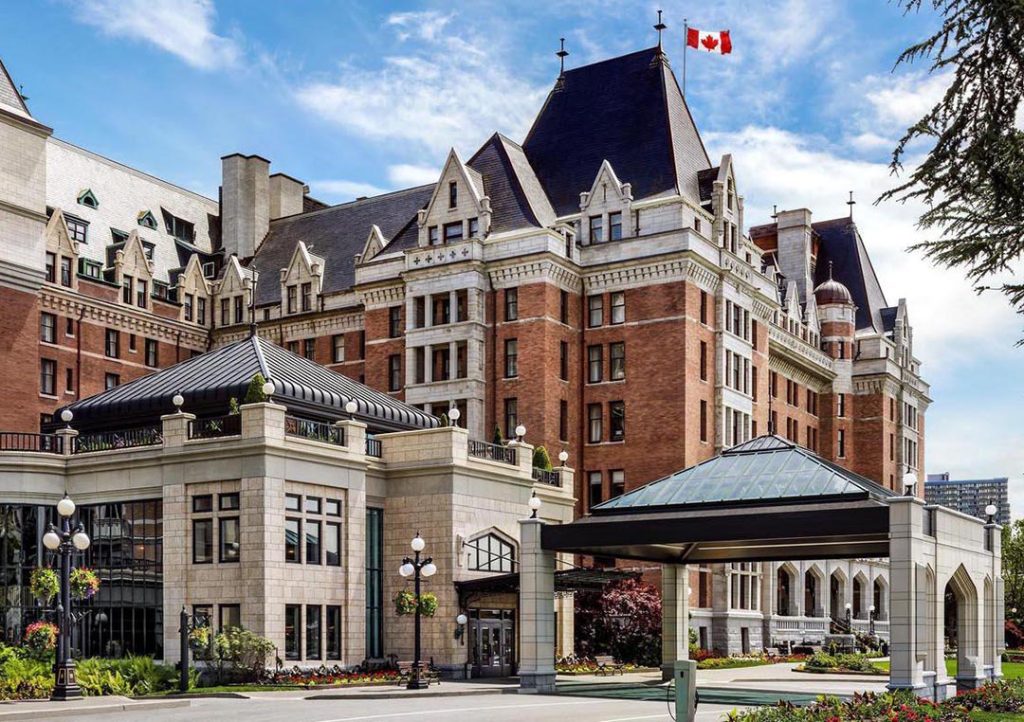
The first hotel that left a lasting impression on me was the Fairmont Empress.
Situated right next to the Inner Harbour, it boasts a classic British castle-style exterior. Standing at the entrance for the first time, I felt a distinct sense of displacement in time—it didn’t feel like North America, but rather like stepping into a scene from a period film.
The lobby is soaring and spacious. Chandeliers, wood accents, and intricate carpet patterns all underscore an air of “traditional elegance.” The check-in process was unhurried; it wasn’t about the efficiency typical of express hotels, but rather a service that felt like a ritual.
My room offered a view toward the harbor. Waking up in the morning, the light would slowly spill into the room, and the reflections from the water bathed the space in a soft glow. What I remember most vividly is returning to the room at night: city lights twinkling in the distance, the harbor settling into quiet, and the room enveloped in a steady, peaceful silence.
It is not merely a “modern comfort hotel,” but a “historic experience” in accommodation.
2.Delta Hotels Victoria Ocean Pointe Resort: A Modern Setting Surrounded by Water
The second hotel was the Delta Hotels Victoria Ocean Pointe Resort.
If the Empress represents “history,” this hotel embodies “modernity.” Located on the opposite side of the harbor, it offers expansive views, with many rooms commanding a panoramic vista of the Inner Harbour. My immediate impression upon checking in was the “clean” feel of the space. The design leans toward modern business style but incorporates nautical elements—such as blue tones, glass features, and open sightlines.
One evening, I sat by the window, watching the harbor lights flicker on one by one. Boats moved slowly, and the reflections on the water shifted in subtle, mesmerizing ways. In that moment, I did nothing but watch the city slowly settle into the night.
The experience this hotel offered wasn’t about “slowing down” or stopping; rather, it was about clearly observing the city in motion.
3.Hotel Grand Pacific: Quiet, steady, and slightly formal
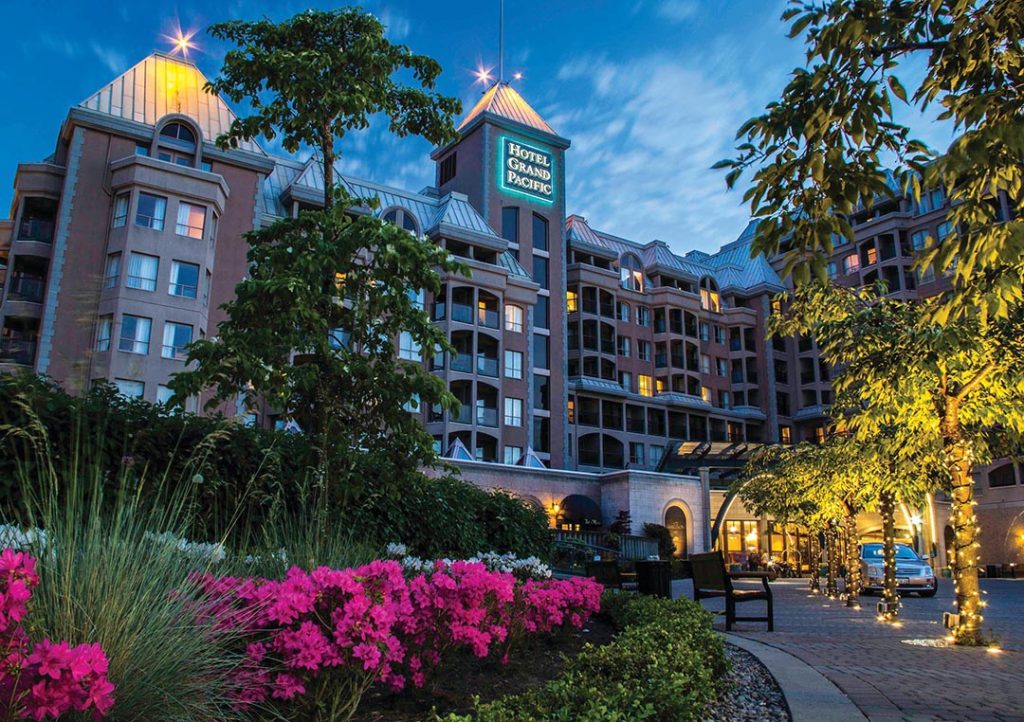
The third hotel is the Hotel Grand Pacific.
It is also located near the harbor, but its overall atmosphere is more “neutral” than the previous two.
The lobby is understated yet grounded, exuding a subtle sense of formality. The check-in process was seamless, free of superfluous, purely decorative service flourishes. The room layout follows a traditional hotel style but is impeccably maintained. The bed offered consistent comfort—no surprises, but certainly no issues either.
Staying here gave me a distinct impression: this is a hotel that doesn’t disrupt the rhythm of your trip. You can go out and explore during the day and return at night simply to rest, without the hotel environment breaking your mood. One evening, I returned from the cold outdoors; the shift in temperature upon entering the room was striking—transitioning from the city’s damp chill to the steady warmth of the indoors.
This sense of “stability” turned out to be its defining characteristic.
4.Magnolia Hotel & Spa: A more intimate downtown experience
The fourth hotel is the Magnolia Hotel & Spa.
It is a small-scale property, yet it boasts an excellent downtown location close to shops and restaurants. Unlike large-scale hotels, it leans towards the “boutique hotel” style.
My first impression upon checking in was a sense of closeness—not in terms of crowding, but in the intimate connection between the guest and the space. The room features a warm color palette, incorporating wood accents and soft lighting.
What left the deepest impression was the experience of returning to the hotel at night. Walking through the city center, there was a gentle hum of life rather than loud noise, yet upon entering the hotel, the outside world was completely shut out. The transition was palpable: instantly moving from “being in the city” to a “private sanctuary.”
It is ideal for travelers who want a convenient location without the experience being overshadowed by the sheer scale of the hotel.
5.Fairmont Empress (An extension of tea and accommodation): A part of the lifestyle
Although I mentioned the Fairmont Empress earlier, in Victoria, it is more than just a place to stay; it serves as a “lifestyle experience center” in its own right.
Many people visit not merely for accommodation, but to experience its afternoon tea culture. I spent some time sitting in the hotel’s public areas, watching people come and go; many were dressed in formal or semi-formal attire, stopping by for tea.
The atmosphere was unique—unlike a typical hotel lobby, it felt more like a social space. Here, time wasn’t merely “spent”; it was “extended.”
How Hotels Changed My Perspective on Victoria
After staying at these hotels in Victoria, I gradually realized something had shifted:
Hotels are more than just places to sleep; they offer different vantage points from which to understand the city’s rhythm. Together, these spaces formed a complete impression of Victoria.
Looking back, what stays with me isn’t just the rooms, but the many “transitional moments”: the quiet upon entering, the light reflecting off the water outside the window, the harbor at night, and the city’s unhurried, steady pulse.