If I had to name a city that embodies a “powerful sense of presence,” my experience in Rio de Janeiro would be the most immediate answer. It isn’t a city you ease into gradually; it’s a place that pulls you in the moment you step off the plane—the light is brighter, the sounds louder, the air more humid, and the people more expressive. It doesn’t test the waters; it lays everything out before you all at once.
During those few days, my life was defined by three things: the beach, the mountain scenery, and the city in motion.
First Glimpse of Rio: Losing My Bearings Between Sea and Mountain
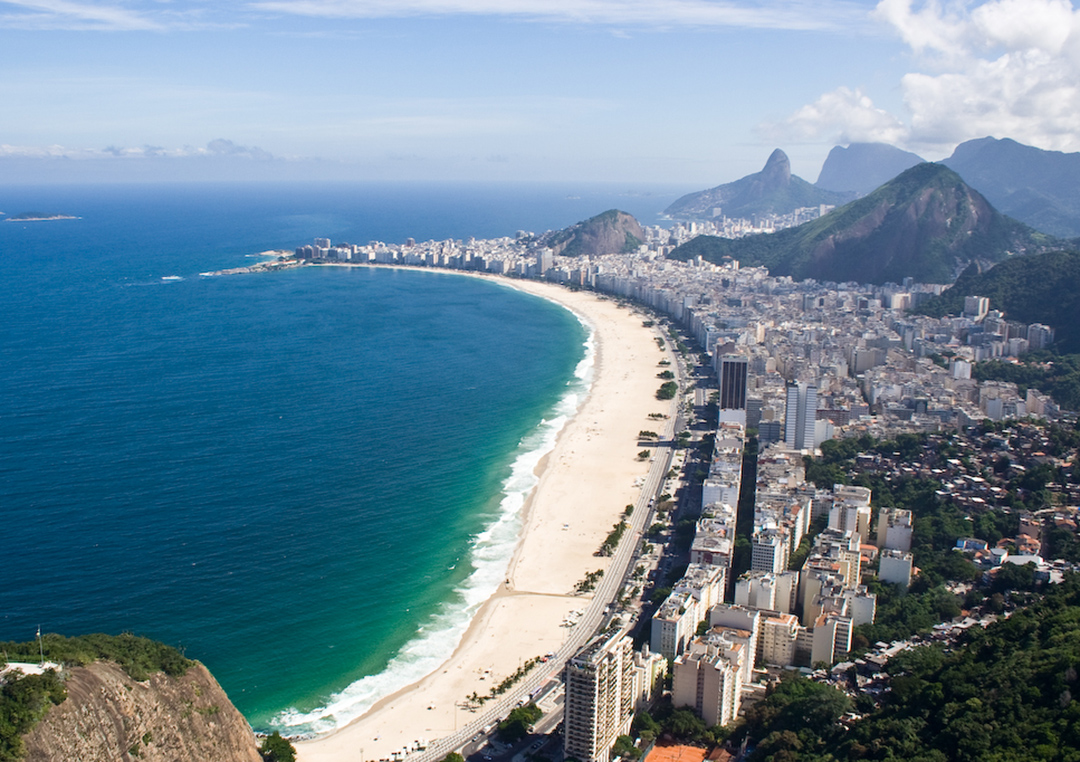
Upon entering the city, it wasn’t the architecture that first caught my attention, but the topography. As I traveled from the airport toward the city center, my view was constantly interrupted and then revealed anew: the bay on one side, mountains rising abruptly on the other, and the dense urban landscape wedged between them.
The structure is unique—the city doesn’t simply spread out; it is “embedded” within the natural landscape. I had a strong intuition right then: life here wouldn’t follow a linear path; instead, it would be constantly interrupted and reconnected by the terrain. That feeling was confirmed time and again.
Copacabana Beach: The City’s Front Line
I truly found the city’s rhythm at Copacabana Beach. It wasn’t a “quiet beach,” but a space of constant motion. The stretch of sand was vast and crowded, yet not chaotic. You could see joggers, soccer players, vendors selling cold drinks, sunbathers, and even people simply lying there, lost in thought.
As I sat down, the first thing I noticed was the layering of sounds:
- The sound of waves formed the base layer;
- The chatter of the crowd made up the middle layer;
- Music and the calls of vendors created the top layer.
They overlapped, yet none drowned out the others.
I ordered an iced drink and sat in a beach chair, watching the crowd flow by. In that moment, I realized that the city’s “public space” was alive—it wasn’t merely decorative. The beach wasn’t just a tourist attraction; it was an integral part of daily life.
The Rhythm of Ipanema: A Softer Shoreline
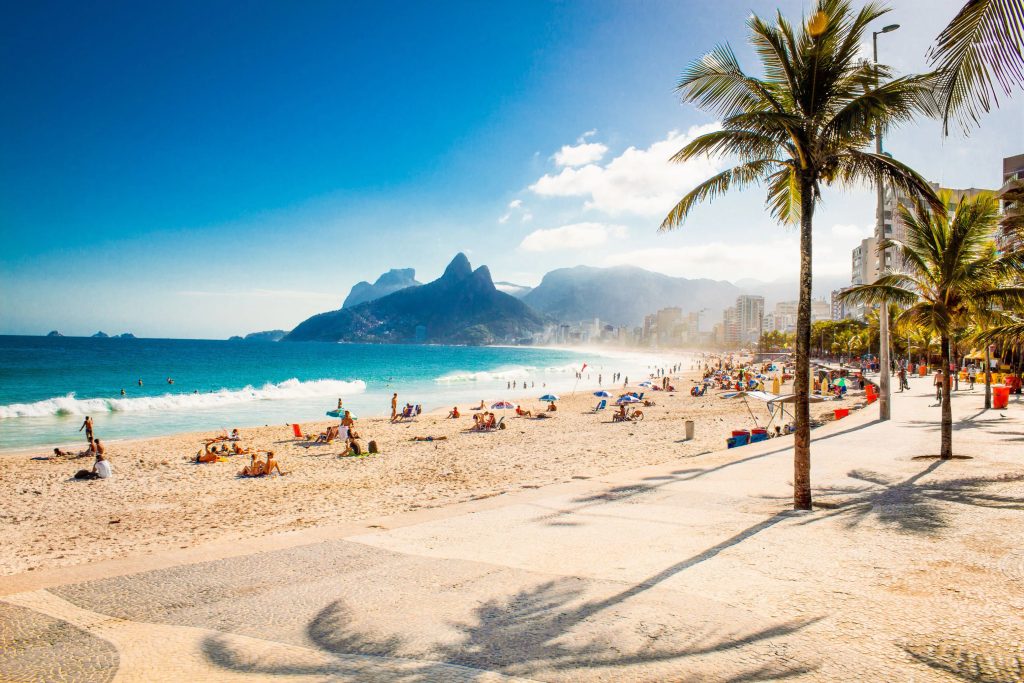
Later, I visited Ipanema Beach.
If Copacabana was defined by “intense, outward energy,” Ipanema felt more like “restrained relaxation.” There were still plenty of people, but the pace was noticeably slower. The sea breeze felt stronger, and the light softer. I wandered here for a long time without a specific destination, simply following the coastline.
For a while, my mind was almost blank; I just watched the surfers, the silhouettes of distant mountains, and the ever-shifting colors of the sea. The experience here wasn’t so much about “looking at the beach” as it was about “being enveloped by it.”
Christ the Redeemer: A Still Point Above the City
In Rio, it is impossible to overlook Christ the Redeemer. The journey up the mountain is actually more significant than one might imagine. The city unfolds gradually as you ascend: houses shrink, the coastline stretches out, and the mountain forms become distinct.
Upon reaching the summit, the view opens up completely. It is hard to sum up the feeling with a simple word like “spectacular”; it feels more as if the space has suddenly transformed into a three-dimensional map. I stood there for a long time—taking few photos—simply observing the city’s layout: the bays, beaches, mountains, and densely packed residential areas, all appearing as if carved anew by nature.
What struck me most wasn’t the statue itself, but its state of stillness—in a city so dynamic, it was the only element that remained completely motionless.
Sugarloaf Mountain: A Perspective from the City’s Edge
Another place that left a deep impression on me was Sugarloaf Mountain.
As the cable car ascended, the city seemed to recede, and the bays gradually revealed their full shape. At the summit, I saw a completely different Rio: not a collection of streets, but a structure; not just buildings, but a spatial arrangement.
As sunset approached, the light turned golden, and the sea’s surface became intensely reflective. In that moment, I was speechless; I simply stood there watching the city shift between light and shadow. This perspective made me realize for the first time that Rio is a city defined by its landscape rather than its architecture.
City Streets: A Vibrant, Open Daily Life
Back in the city center, the pace of reality returned immediately.
The streets were bustling, yet the crowds didn’t feel oppressive. People’s movements were direct and unselfconscious—chatting, walking, selling goods, or waiting. I bought simple snacks along the way, such as grilled skewers, fruit juice, and street food. The flavors were uncomplicated but felt fresh and immediate.
One detail particularly struck me: many shops were completely open to the street, lacking distinct boundaries; there was almost no separation between the city and everyday life. It is difficult to draw a strict line between “public space” and “private space.”
Sunset: The moment when the city’s mood is most concentrated
In Rio, the sunset is not merely a backdrop; it is an “event.” Especially by the sea, the sun’s descent and the crowd’s reaction seem almost synchronized.
I once watched a full sunset at Ipanema Beach. As the sun neared the horizon, the crowd would gradually slow down; conversations quieted, and even the music seemed to soften. In the final moments, the sky transformed into a blend of orange and purple, and the surface of the sea appeared to light up. Then, night fell almost instantly—there was no lingering transition.
Rio at night: The heat doesn’t vanish; it simply shifts form
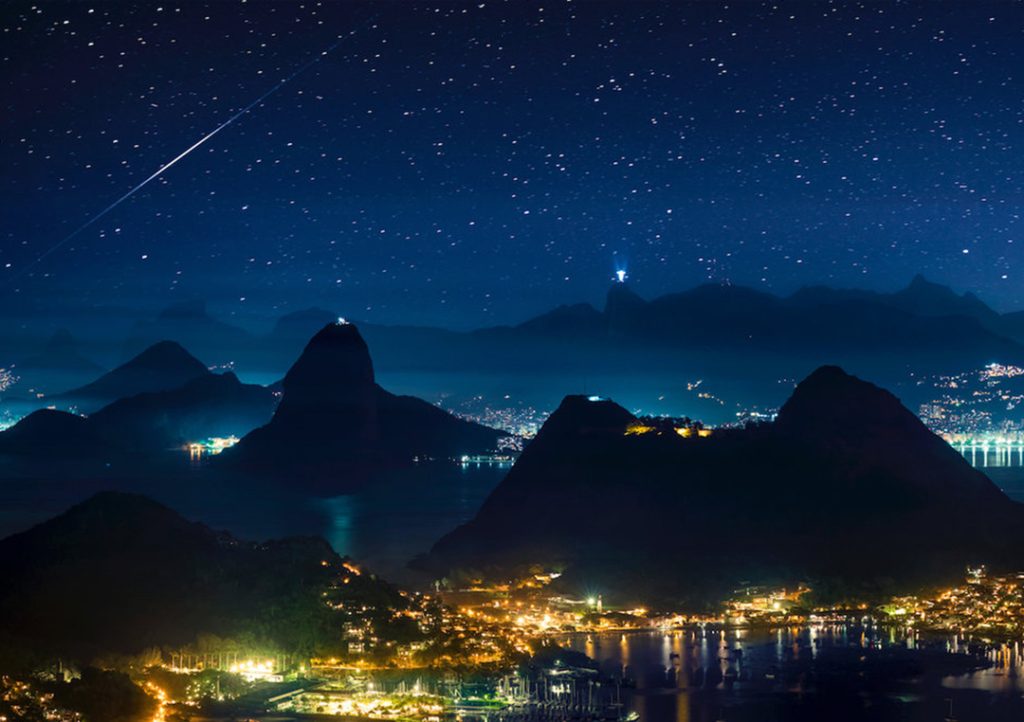
The city doesn’t quiet down at night. Music, restaurants, and street life persist, though they take on a different rhythm.
One evening, while walking through a neighborhood, I saw bars packed with people; yet, the atmosphere wasn’t chaotic—it was fluid and dynamic. It was a unique sensation: by day, a “beach city”; by night, a “street city.” The two states didn’t clash but transitioned naturally into one another.
A city that won’t let you keep your distance
If I had to sum up Rio de Janeiro, I would say its most distinctive quality is this: it refuses to let you remain a mere spectator. It is not a city to be viewed from afar, but one that constantly pulls you right into the thick of life.
Looking back, what stays with me isn’t any single landmark, but a layering of sensations: the humidity of the sea breeze, the rich textures of the crowd’s voices, the vistas from the mountaintops, and the palpable sense of the city breathing—always in motion.