If there is one city on Canada’s West Coast that truly made me slow down my pace, it is Victoria.
It doesn’t overwhelm you with skyscrapers, nor does its bustling rhythm constantly remind you that you are in a city. Instead, the experience works in reverse: upon arrival, it feels almost too quiet—even a bit “empty”—but after spending some time there, you find yourself unaccustomed to the frantic pace found elsewhere.
For that week, “strolling” became my primary way of experiencing life.
First Impressions of Victoria: Starting at the Harbor
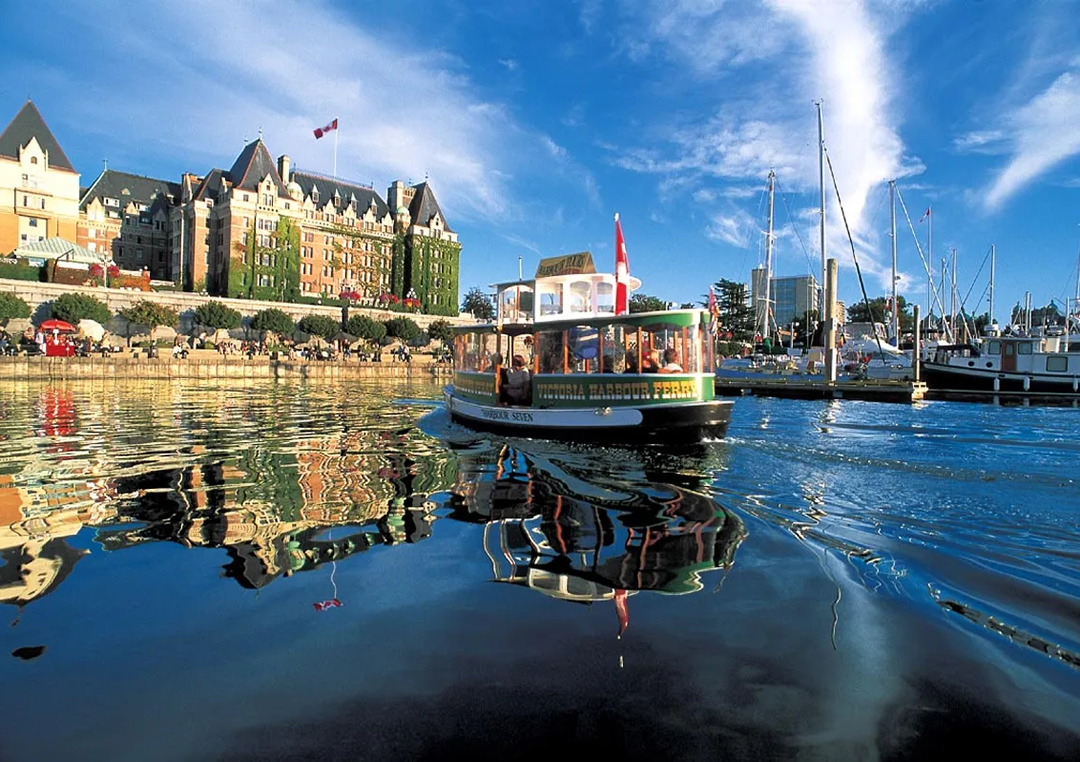
Stepping off the boat and into the city center, the harbor was the first thing to catch my eye. The water was calm, the boats were neatly moored, and the air held a scent that was moist yet refreshing, never oppressive. My initial impression of the city center was distinctly “English”—low-rise buildings, red-brick accents, tidy streets, and a commercial district layout that felt charmingly vintage.
I had a fleeting illusion that I wasn’t in North America at all, but rather in a small English harbor town where the pace of life had been deliberately slowed. However, it was a walk by the harbor on that first evening that truly allowed me to sync with the city’s rhythm. The sun set slowly, turning the water to gold; there were few people on the streets, and even the ambient sounds seemed to soften.
In that moment, I realized: Victoria is a city defined not by specific “events,” but by the subtle shifts of time itself.
The Butchart Gardens: Four Seasons by Design
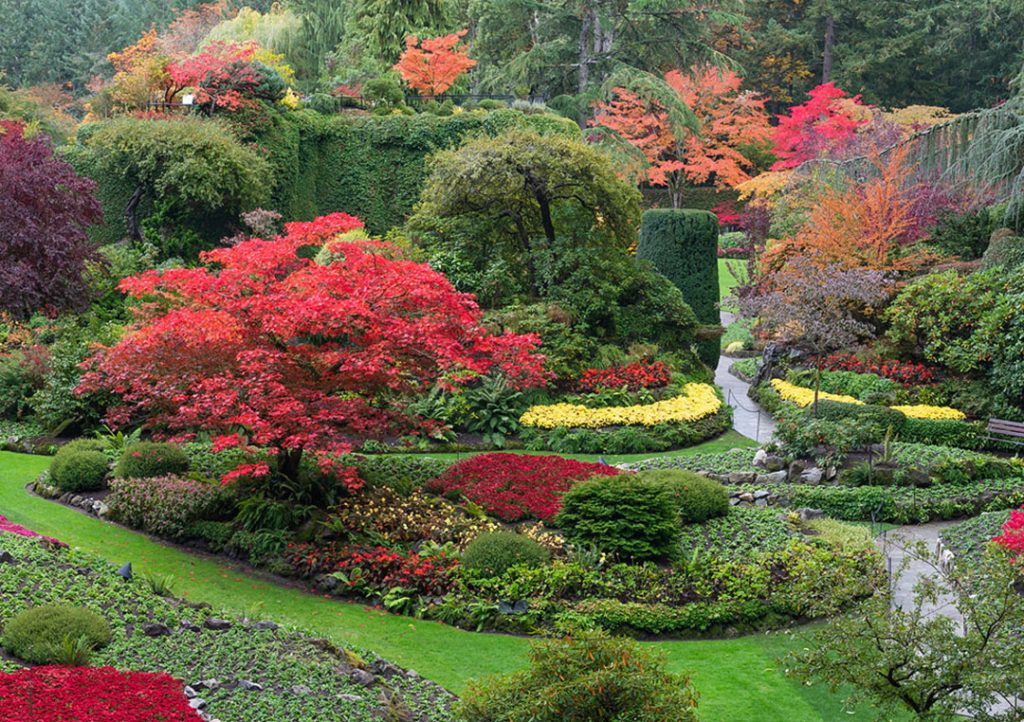
Of all the stops on my itinerary, Butchart Gardens felt the most “surreal.” I initially expected a standard garden, but once inside, I discovered a meticulously designed landscape—a world unto itself.
The transitions between different zones were striking: the dense, vibrant colors of the Rose Garden, the minimalist “negative space” of the Japanese Garden, and the formal symmetry of the Italian Garden. Walking through them, I felt as though I wasn’t merely looking at flowers, but stepping into distinct chapters of a space. The section that left the deepest impression on me was the Rose Garden. The air was thick with the scent of flowers—not a pungent aroma, but a layered one: sweet notes close by, the damp, verdant smell of plants a little further out, and the scent of earth and water beyond that.
I sat there for a long time without any specific agenda—simply watching people pass by, observing the shifting light, and seeing the flowers sway gently in the breeze. It was an experience that defied the label of a mere “tourist attraction”; instead, it felt like a form of “slow immersion.”
Strolling by the Harbor: The City’s Way of Breathing
What truly captivated me about Victoria wasn’t its sightseeing spots, but the harbor promenade.
Every evening, I would take a walk along the waterfront to watch the changing surface of the water. On clear days, the distant mountains seemed to merge seamlessly with the sky; on days with overcast weather, the water took on a cool, grayish-blue hue. While the harbor area was dotted with small cafés and restaurants, the atmosphere remained calm rather than boisterous. People seemed to be there to simply “linger” rather than to “consume.”
I once sat on a bench watching a boat slowly dock; its unhurried pace put me in a trance-like state. There was no rush, no one urging it on—the entire city seemed to move in sync with its rhythm. In that moment, I grasped the city’s underlying logic: it wasn’t about “efficiency,” but about “allowing time to simply exist.”
British Architecture and Urban Character: A Preserved Sense of Order
Walking through downtown Victoria, it is impossible to overlook its British architectural style. Unlike cities that merely mimic a “European look,” Victoria feels like the genuine product of historical continuity: stone buildings, arched windows, the facades of vintage hotels, and structural elements that bear the imprint of the colonial era.
For a time, I would wander downtown aimlessly every day, following no set route. The more I walked, the more I noticed a distinct characteristic: the streets were incredibly “legible”—easy to navigate and free from confusing complexity. This sense of order fostered a unique state of mind—one of tranquility rather than excitement.
The city doesn’t jolt or stimulate you; instead, it gently lowers your anxiety levels.
The City’s Daily Pace: A Rhythm of Life Without Urgency
During my time in Victoria, the most noticeable change was that my “sense of time” slowed down. Mornings began without the feeling of rushing; lunch was a casual affair; afternoon walks became the main activity; and evenings were spent gazing at the sea or enjoying a coffee. Here, there is none of that big-city pressure to feel like you “must be doing something.” I remember one day simply sitting in a café, zoning out and watching pedestrians pass by outside the window. Nothing special happened, yet I didn’t feel bored. It was then I realized that this city allows for moments where “nothing happens.”
Climate and Mood: Psychological Shifts Brought by Mild Weather
Victoria’s climate is mild, a factor that significantly shapes daily life. There is no extreme cold or intense heat. The air is moist but not oppressive, and the light is soft. This kind of climate encourages a less “defensive” way of being; you don’t feel the urge to rush indoors, nor do you have to disrupt your plans because of the weather.
I eventually noticed that my walking pace here had slowed down considerably, and I found myself naturally inclined to pause and observe my surroundings. Here, the climate isn’t merely a backdrop; it is a variable that directly influences the rhythm of life.
Victoria at Night: Quietude Over Bright Lights
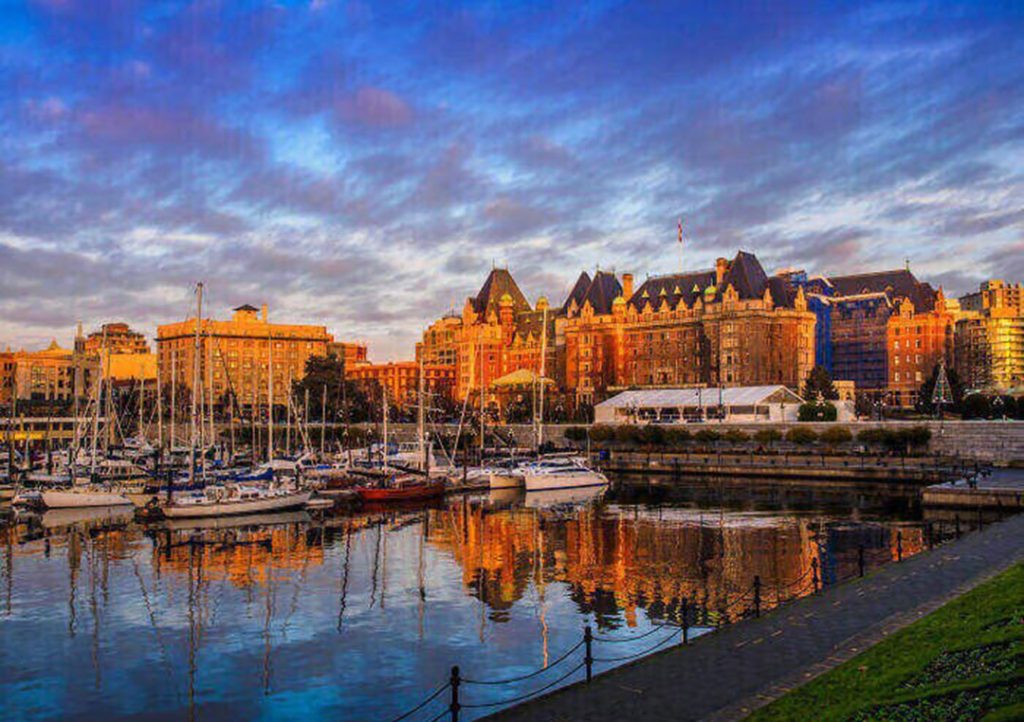
When returning to the city center at night, Victoria becomes incredibly quiet. The lighting isn’t flashy or dazzling, but rather soft and gentle. While there are bars, they don’t cluster into noisy, rowdy districts. I once walked near the harbor at night and could hear little more than my own footsteps and the distant sound of water.
That quiet isn’t an “emptiness,” but rather a “controlled, low level of noise.” It made me realize for the first time that a city’s nightlife doesn’t have to rely on bustle to be meaningful.
A City That Defines Itself Through “Slowness”
If I had to sum up Victoria, I wouldn’t use words like “fun” or “lively.” It represents a state of being: it doesn’t try to seize your attention; instead, it gradually alters your default setting regarding the “pace of life.”
Long after leaving, I still remember the sea breeze, the scent of the gardens, and those afternoons where it was perfectly fine for nothing at all to happen.