If one had to sum up São Paulo in a single sentence, it would be that the city resembles a system in constant motion rather than a static place merely meant to be viewed.
The five hotels where I stayed served as five distinct “entry points” into this city: some emphasized striking design, others favored quiet restraint, while some leaned towards business functionality or a more lived-in, residential feel. Each one revealed a different texture of the same city.
1.Hotel Unique São Paulo: An Experience Akin to Staying in an Architectural Masterpiece
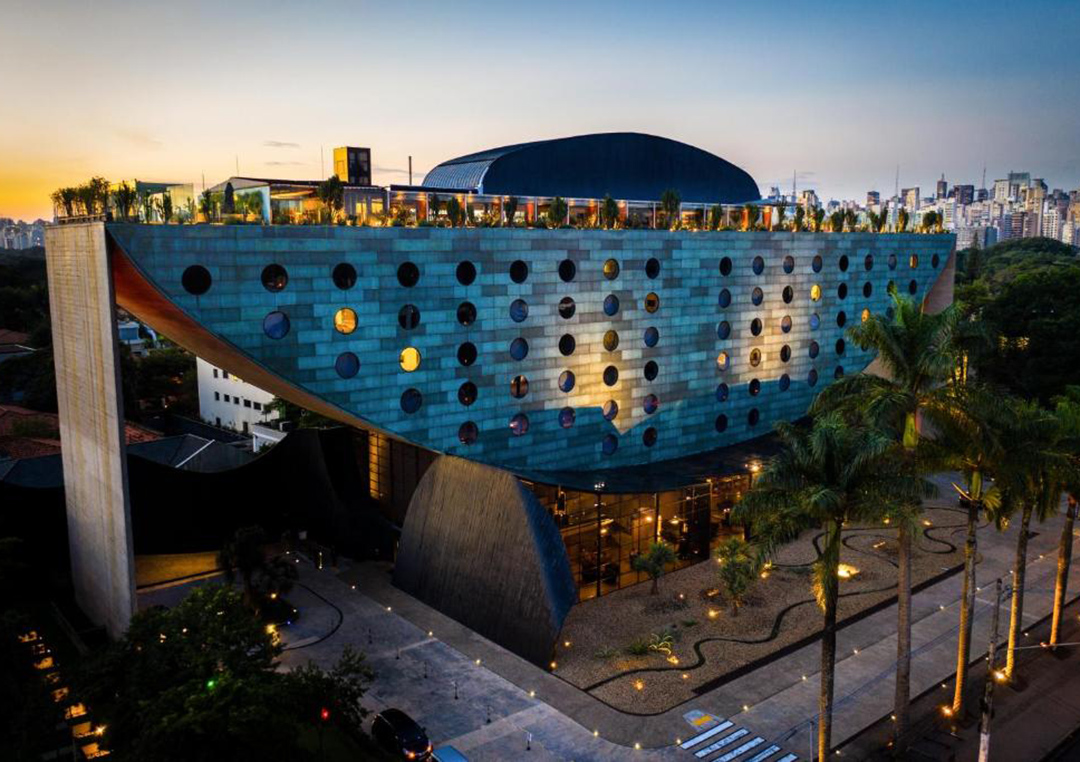
The first stop was Hotel Unique São Paulo.
Its most striking feature is its exterior—the curved structure is instantly recognizable. From a distance, it looks less like a traditional hotel and more like a piece of urban installation art.
Stepping into the lobby, the sense of space is dramatically amplified; the soaring ceilings combined with the lighting design create the illusion of entering an exhibition space rather than a place to stay.
The interiors continue this design language: clean lines and a restrained color palette, allowing the city view outside the window to take center stage.
I was particularly struck by the view from the room at night: the interior lights reflected against the glass, while outside lay a dense yet orderly river of city lights—the entire scene felt as though it had been composed in layers.
The bathroom design is also distinctive, featuring a semi-open layout that emphasizes spatial continuity rather than traditional compartmentalization.
2.Fasano São Paulo: Understated Luxury Defined by Restrained Detail
The second hotel was Fasano São Paulo.
In contrast to the visual impact of Hotel Unique, this property takes a completely different approach: one of great restraint.
The lobby is compact but perfectly proportioned. The combination of wood, leather, and metal is balanced and solid, free from any superfluous ornamentation.
I noticed a specific detail during my stay: the lighting was almost entirely warm and low-intensity; the corridors weren’t brightly lit, yet the ambiance was soft and inviting.
The standout quality of the room wasn’t a specific design element, but rather a sense of quietude. The soundproofing was excellent; despite the hotel’s location in a bustling district, the interior remained undisturbed.
The bed offered firm support rather than a soft, sinking feel—an overall design choice favoring long-term comfort over instant, superficial gratification.
3.Tivoli Mofarrej São Paulo: A Comprehensive System of Sophisticated Business Hospitality
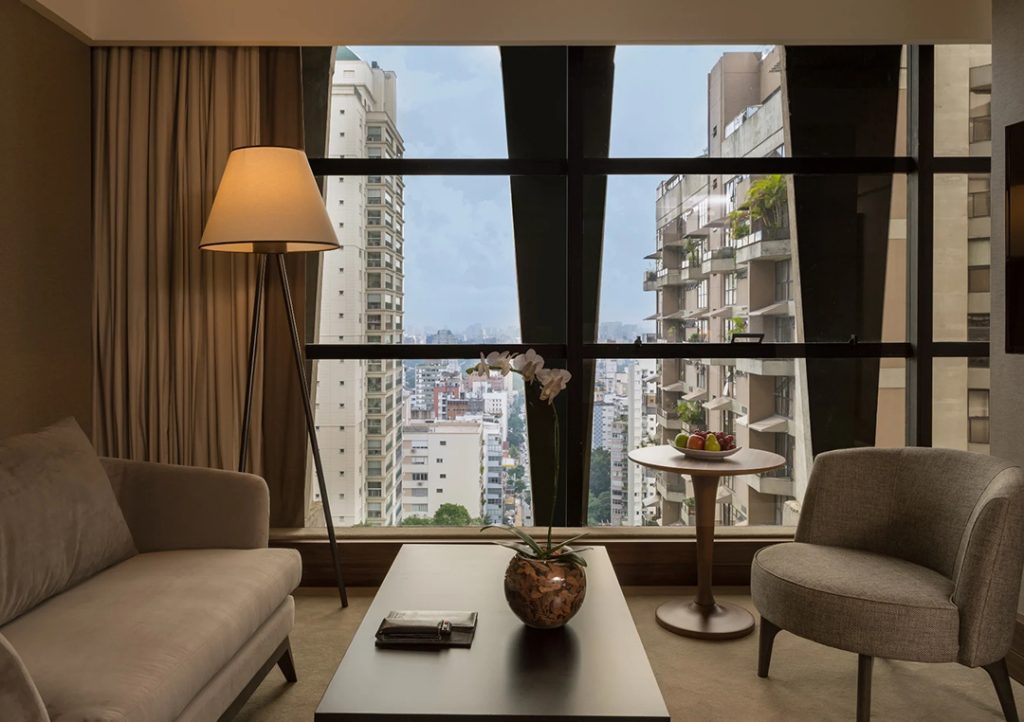
The third hotel was Tivoli Mofarrej São Paulo. This hotel is characterized by a strong sense of cohesion.
The lobby is spacious and clearly structured as a business hotel, with a distinct separation between the reception area and the lounge.
I recall the elevator area being highly efficient; while devoid of superfluous decoration, the layout of the circulation paths was clear, making it easy to navigate.
The guest rooms feature a classic high-end business style: ample desk space, a logical arrangement of power outlets, and well-defined layered lighting (with independent controls for overhead lights, bedside lamps, and reading lights).
The bathroom features standard marble finishes, stable water pressure, and highly reliable functionality.
It is not a “design hotel” in the stylistic sense, but every detail emphasizes consistent, reliable execution.
4.Pullman São Paulo Ibirapuera: An urban hotel closer to residential life
The fourth hotel is the Pullman São Paulo Ibirapuera.
Compared to the density of the city center, this hotel has a noticeably more relaxed atmosphere; located near Ibirapuera Park, the surrounding area feels more like a lived-in neighborhood.
The lobby is more open, featuring a hybrid design of modern business and leisure styles, with plenty of public areas where guests can linger.
The layout of the breakfast area left a strong impression: the space feels unconfined, with comfortable spacing between tables, so it never feels crowded despite the volume of guests.
The room design leans towards modern minimalism—highly functional without being over-designed.
The view from the window captures the transition between city blocks and green spaces, avoiding the wall-to-wall building density found in the city center.
5.L’Hotel PortoBay São Paulo: A boutique hotel offering an intimate, contained experience
The fifth hotel is L’Hotel PortoBay São Paulo.
Of the five, this is the one with the most “restrained” character.
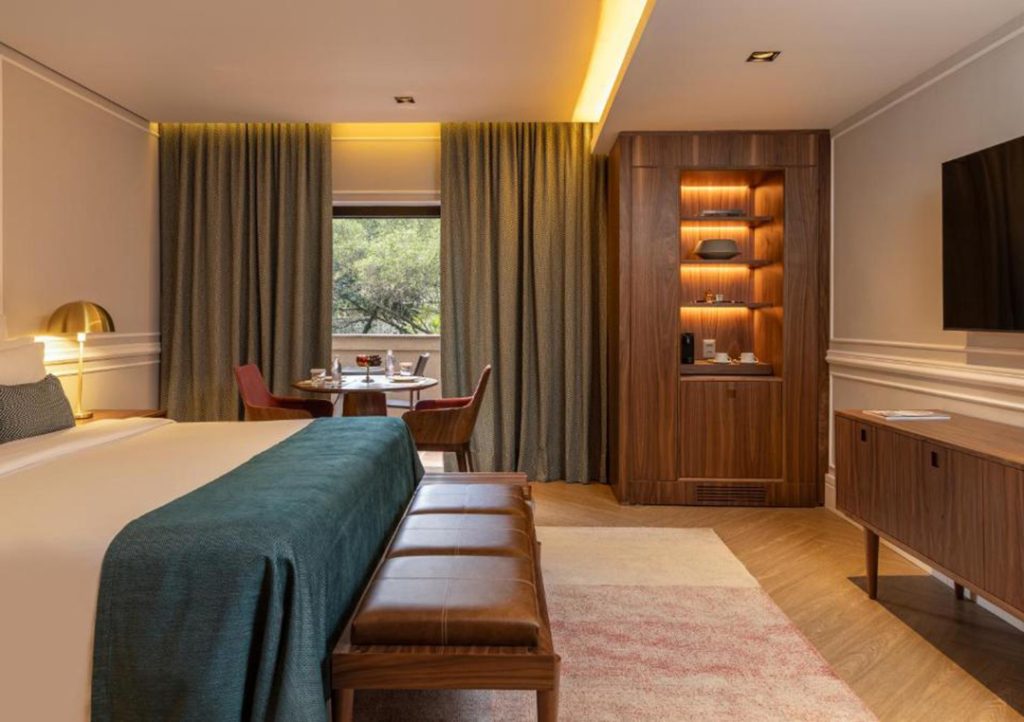
Upon entering, the immediate impression is of a space condensed into a quieter, more intimate system; the lobby is compact but features carefully curated lighting—warm tones and low-level illumination.
The interiors utilize a significant amount of fabric and wood, creating a generally soft and soothing atmosphere.
The bed is designed to feel enveloping; there is a slight sensation of sinking in when lying down, yet it provides ample support.
The bathroom is not large, but the design is compact and fully functional, ensuring no space is wasted.
Rather than emphasizing the efficiency or scale typical of large hotels, it focuses on the experience of a quiet, restful stay.
Five Hotels, Five Ways to Experience São Paulo
Through these five hotels in São Paulo, I glimpsed different facets of the same city:
- Hotel Unique: Visual impact and urban expression
- Fasano: Restraint and meticulous attention to detail
- Tivoli: A mature business framework and reliable functionality
- Pullman: Openness and a sense of transition within a residential area
- L’Hotel PortoBay: Boutique intimacy and a quiet retreat
Far from being repetitive, they serve as distinct entry points, allowing me to access the complex fabric of the city from different perspectives.